NOTRE HISTOIRE
Beaucoup de choses ont changé depuis qu’OLG a été fondée en 1975, mais pas notre engagement à faire une différence pour la population de l’Ontario. Découvrez notre histoire pour en savoir plus sur notre passé et pour être enthousiasmé par notre avenir.
NOTRE HISTOIRE
Beaucoup de choses ont changé depuis qu’OLG a été fondée en 1975, mais pas notre engagement à faire une différence pour la population de l’Ontario. Découvrez notre histoire pour en savoir plus sur notre passé et pour être enthousiasmé par notre avenir.
HISTOIRE RICHE, AVENIR PROMETTEUR
OLG redonne fièrement à la population et à la Province de l’Ontario depuis que nous avons lancé la première loterie en Ontario en 1975. À mesure que nous évoluons, nous continuons de soutenir les collectivités tout en façonnant l’avenir du divertissement par le jeu. Grâce à la croissance et à l’expansion de nos produits, nous innovons le secteur du jeu de l’Ontario tout en tissant des liens étroits avec nos clients et nos partenaires pour conduire à un succès continu. Nous sommes impatients de voir ce que l’avenir nous réserve.

OLG au fil des ans
Explorez 40 ans de dates clés célébrant tout ce qu’OLG a accompli.

1975
1975
Février
Le gouvernement provincial de l’Ontario créé la Société des loteries de l’Ontario (SLO).

1975
Avril
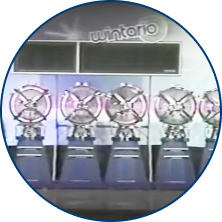
La SLO lance son premier jeu de loterie, WINTARIO. Les bénéfices provenant du jeu sont investis par le ministère de la Culture et des Loisirs en vue de promouvoir le conditionnement physique, les sports, la culture et les loisirs. Wintario est demeuré un produit populaire de la Société jusqu’en 1996.
1975
Août
La SLO verse à la province sa première tranche de six millions de dollars de bénéfices.
1975
Octobre
Diffusion télévisée de la première émission régulière du WINTARIO Show avec les animateurs Faye Dance et Fred Davis.
1976
1976
Mars
Les bénéfices des loteries de la première année d’exploitation de la SLO se chiffrent à 43 millions de dollars.
1978
1978
Novembre
Lancement de LOTTARIO, le premier jeu de loterie sur terminal de l’Ontario.
1979
1979
Décembre
Le total des ventes de la SLO franchit la barre du milliard de dollars.
1982
1982
Juin
La Société de la loterie interprovinciale lance LOTTO 6/49, le tout premier jeu de loterie sur terminal offert à l’échelle du Canada.
1982
Septembre
Création de la Fondation Trillium de l’Ontario, organisme chargé de répartir les bénéfices provenant des loteries par l’entremise du ministère du Tourisme et des Loisirs.
1984
1984
OLC verse à la Province des bénéfices dépassant 1 milliard de dollars.
1984
Mars
Lancement de « SHOOT TO SCORE », le premier jeu INSTANT à 2 $.
1985
1985
Septembre
LOTTO 6/49 devient un jeu de loterie bihebdomadaire : les tirages ont lieu le mercredi et le samedi.
1986
1986
Juillet
Le gouvernement annonce la relocalisation de la SLO de Toronto à Sault Ste. Marie.
1989
1989
Janvier
Lancement de PICK-3, une loterie quotidienne de l’Ontario.
1989
Novembre
Lancement de ENCORE, un jeu de loterie qui se joue conjointement avec LOTTO 6/49.
1989
Décembre
Le gouvernement de l’Ontario étend l’utilisation des bénéfices de la loterie aux opérations médicales dans les hôpitaux.